Many preschool theme pictures


Having been asked about preschool themes to teach, I’ve compiled a list of various themes that can be used with a preschool child at home or with a whole class at a preschool or childcare centre.

I’ve attached a free printable pdf of my list of themes at the bottom of this post.

How long should you use a theme?

That depends on your situation and your children. I’ve taught in preschools that use one theme a week, though sometimes a big theme is extended over two weeks or more. Other preschools will choose to combine two themes and keep them for an entire month. The best length for you will be affected by how engrossed you are in the theme and how often you teach or do crafts regarding the theme. Also, pay attention to your children’s interests. If you know your children love animals, you likely could use an animal theme for longer. Other times, however, changing up the theme every week will keep the children more engaged.

What aspects can be affected by the theme?

You can embrace your chosen theme as much or as little as you want. Here are some areas you could choose to incorporate your theme.

  • Circle time:
    • The first place most people think of incorporating a theme is during the teaching time, referred to by preschool teachers as circle time. Themes can be incorporated through songs, stories, activities, and direct teaching. Using visuals is beneficial whenever possible.
    • If you’re looking for song ideas, glance at my Big List of Simple Preschool Songs.
  • Crafts:
    • There are endless craft ideas available online to go with nearly any theme. A quick search on Pinterest will show you a few. Keep in mind, theme-focused crafts are often product-oriented (i.e. the child is given a specific example to replicate). There are benefits to product-oriented crafts, but don’t forget to include some open-ended art as well. For “Autumn” you could give your child a blank paper and yellow, orange, and red paints to use however they’d like. For “Transportation” you could allow your child to drive cars through paint and make tracks on their paper. (Cleanup for this one is trickier!) For other open-ended ideas check out Beyond the Paintbrush then put on your thinking cap to tie them into your theme.
  • Books:

    • If you have a local library, books are a great way to incorporate a preschool theme. Is “Under the Sea” your theme? Search for books about fish, sharks, and the ocean. Some themes have countless fantastic books, for other themes it’s harder to find suitable books. Here are some books I’ve enjoyed with my preschoolers, sorted by theme: Books for Preschoolers and Toddlers
  • Decoration:
    • Some preschools will totally transform their classroom with theme-based decorations (bulletin boards, posters, etc.). It’s a lot of work! Others rarely change their decorations. A happy compromise, in some cases, could be having one theme-decorated area or bulletin board that you change based on the theme. If you don’t have posters, consider putting up crafts the children made or printing colour sheets corresponding with the theme. However, don’t feel bad if you don’t decorate by theme. It is not essential.
  • Games/Gym:
    • Get creative during gym time. With preschoolers, a simple game such as this one “4 Sides Preschool Gym Game can be adapted to countless themes. Alternatively, if learning about Space, grab some hula hoops and pretend to fly to the moon together.
  • Field Trips/Outings:

    • Some themes work well to be taken outside the home/classroom. Are you learning about bugs? Go on a bug hunt around the yard or neighbourhood. Are you studying transportation? See how many different types of transportation you can find on a walk around the block.
    • Visit the zoo, aquarium, pet store, science center, or a farm, if your area has them.

Looking for more tips for how to implement a theme and use it to create a curriculum that’s just right for your children? Check out my post: Create Your Own Preschool Curriculum for Free

Preschool Themes List:

Any season:

  • All About Me
  • Alphabet
  • Numbers
  • Shapes
  • Colours
  • Safety
  • Community Helpers
  • Science
  • Space
  • Music
  • Emotions
  • Five senses
  • Healthy Eating
  • Healthy Habits
  • Reduce, Reuse, Recycle
  • Transportation/Things that go
  • Mighty Machines
  • Wheels
  • Ramps
  • Bible
  • Multicultural
  • Circus
  • Superheroes
  • Princesses and Pirates
  • Fables/Nursery Rhymes

Animal:

Here is a fantastic action song that could go with nearly any of these animal themes: If You Want To Be A…

 

  • Zoo Animals
  • Desert
  • Jungle
  • Safari
  • Birds
  • Pets
  • Bugs
  • Farm
  • Dinosaurs
  • Baby Animals
  • Under the Sea
  • Winter Animals
  • Forest Animals
  • North American Animals
  • Reptiles and Amphibians

Fall:

If your program begins in September, remember to keep these first few weeks simpler as you and the children settle into routine.

  • Welcome to School
  • Leaves
  • Apples
  • Harvest
  • Forest Animals
  • Fruits and Vegetables

Winter:

  • Winter Sports
  • Winter Olympics (when it’s on)
  • Winter Animals
  • Snowflakes
  • Snowmen

Spring:

  • Bugs
  • Flowers
  • Baby animals
  • How Plants Grow

Summer:

  • Beach Party
  • Fun in the Sun
  • Teddy Bear Picnic
  • Summer Olympics (when it’s on)

Special days:

  • There are many holidays that can also be used as themes, but I’ll let you make your own list of those.

 Click here to download your free printable pdf of the Preschool Themes List

 

What other themes would you add to the list?
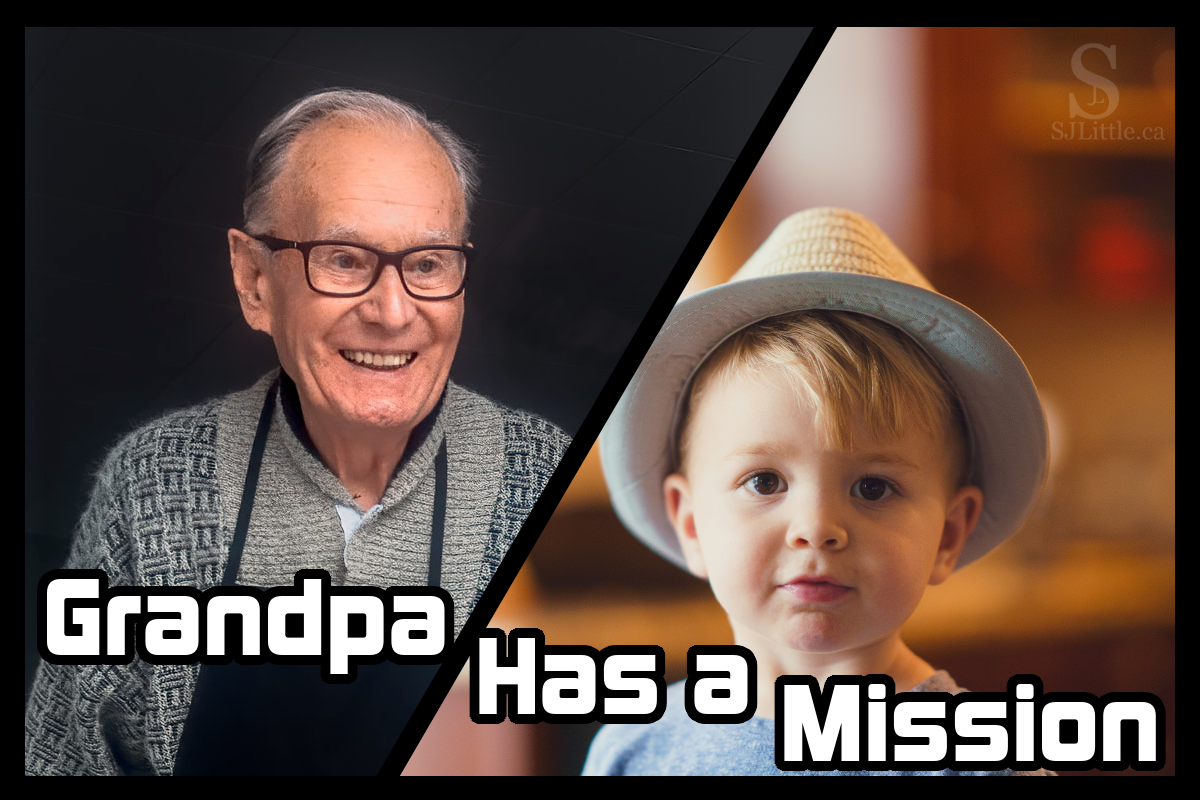
Grandpa and preschool boy


By S. J. Little

Written for #50PreciousWords – a writing for children contest (details at viviankirkfield.com). The goal is to write a story for children with a max word count of 50 words.

Story word count: 50

Inspired by a true Covid-19 lockdown story.

“Hi Grandpa!” Charlie waved.

Through the video call, Grandpa’s eyes twinkled. “I have a mission for you. Find white mountains.”

Taking Grandpa along, Charlie searched the house.

His car mountain was green.

The white baskets weren’t mountains.

Wait! On the mailbox… White mountains!

Charlie spied a package. “Thanks!”

Grandpa beamed.

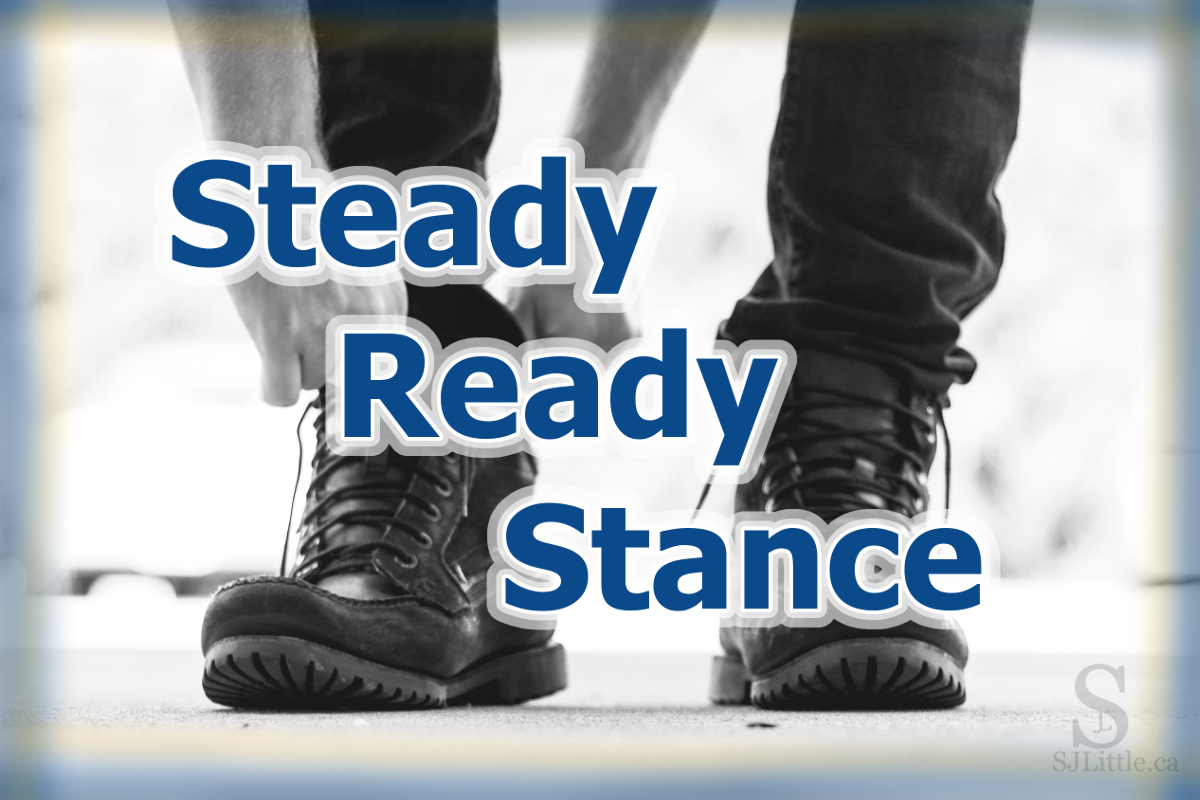
Getting ready by tying shoes behind title: "Steady Ready Stance"


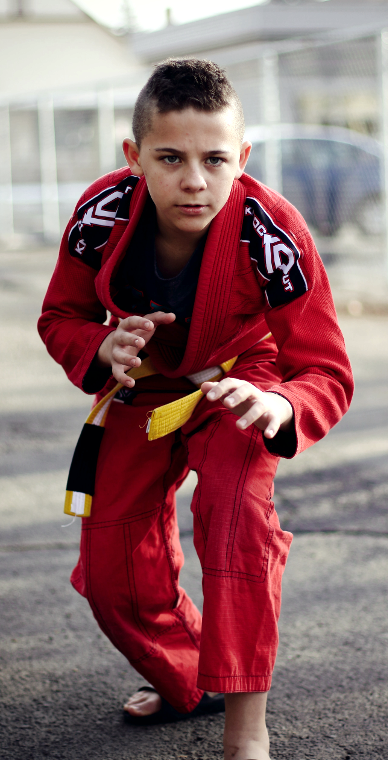
How we stand is important. Nearly every sport has a specific ready stance – a way of standing that improves performance. Many other activities also benefit from having a steady stance. What about my walk with God? Am I standing in a steady ready stance?Boy in ready pose

Recently, as I watered the plants on my windowsills, I found myself thinking about stance. I have plants on four different windowsills in my house. As I watered them this time, I didn’t spill when watering the plants on three of the windows. On the fourth window, however, I accidentally poured some of the water onto the windowsill… again. As I wiped the spilled drops with a towel, I asked myself why it was that the plants on this particular windowsill seem to be the only ones that, when watering, I frequently spill.

The flower pots on the fourth window are identical to the flower pots on the other windows. Therefore, the type of flower pot couldn’t be the problem. I was using the same container to water them and the container was filled to a comparable level as when I watered the other plants. So what was the difference?

Then it dawned on me. My stance was different. The angle at which I approached the flower pots on the fourth window was different from the other three windows. I didn’t have a clear path to the fourth window, so my stance was unusual. My stance wasn’t steady. It forced my arm to a weird angle as I attempted to pour water into the pots.

Once I cleared the path to the windowsill, enabling a better stance, I had less problem with spilling as I watered.

This got me thinking about how important good stances are.

Growing up, I played ringette for many years. (If you don’t know what ringette is, picture ice hockey and you’ll be close.) Early on, they taught us the ready stance. The ready stance involved keeping knees bent and hands on the ringette stick poised for action.

(For those unfamiliar with this ready stance – often refered to as the “hockey stance” – here’s a quick video example.)


From this stance, it is easy to skate toward the action with a burst of speed. If, on the other hand, I were to stand tall and cross my arms while I waited for the action to start, I would be caught off balance. I would likely stumble and fall. Even if I didn’t fall, I would lose valuable seconds as my opponent got to the ring first. Elite ringette or hockey players will frequently be spotted in the ready stance.

Then I began playing goalie for my ringette team. Again there was a ready stance, but this one was different. The ready stance for goalies involves keeping the blade of the goalie stick flat on the ice, and their legs ready to go down in a butterfly at a moment’s notice. Despite the difference in this particular stance, the same principles apply. The goal of the ready stance is to be able to jump into action at the blink of an eye without being caught off balance or flat-footed.

Other activities also benefit from having a good stance.

When walking on ice, having a steady stance is important. Those experienced with walking in icy conditions learn tricks in how to move their feet and legs that help them stay upright. When climbing a ladder, using a good stance keeps the person from falling or toppling the ladder. When lifting a heavy box, using the right stance protects the person from back injuries.

Stance is important in many areas of life. Stance is also important in my walk with the Lord.

The Bible talks about a steady ready stance from which to approach life. This stance is especially helpful when life gets tricky.

What is that stance? Well, first off, much of the Bible is filled with instructions and examples of what my stance ought to be (or ought not to be). Therefore, if I want to understand the full picture of the stance God desires for me to have, I must be reading the Bible – the whole Bible – regularly.

However, to keep this post short, I will focus on two aspects of the Christian stance: faith and readiness.

2 Corinthians 5:7 reminds us that: “we walk by faith, not by sight.”

What is faith? Taking God at His Word. To walk in faith is to trust and obey God. Faith gives steadiness to our stance. (For examples of what faith looks like, read Hebrews 11.)

The second aspect of my stance ought to be a readiness.

“Always be ready to give a defense to anyone who asks you for a reason for the hope that is in you. However, do this with gentleness and respect, keeping your conscience clear…”  (1 Peter 3:15b-16a HCSB)

My stance is to be a ready stance – ready to explain what I believe.

What does this look like? Many examples exist in the book of Acts of godly individuals using the opportunities they had to share about Jesus.

Truth be told, my stance is not always one of readiness and faith. How can I change that? By being intentional to know God and His Word.

We are told that the Bible is “able to give you wisdom for salvation through faith in Christ Jesus. All Scripture is inspired by God and is profitable for teaching, for rebuking, for correcting, for training in righteousness, so that the man of God may be complete, equipped for every good work.”  (2 Timothy 3:15b-17 HCSB)

Keep in mind that the Christian stance is not just about head knowledge. The closer I am walking with God, living according to His Word, the more my stance will be one of faith and readiness.

So how is my stance doing? Have I stopped to consider it recently, or am I too caught up in the busyness of life? Am I off-balance and flat-footed? Or am I steady and ready for action, walking close with my Lord?

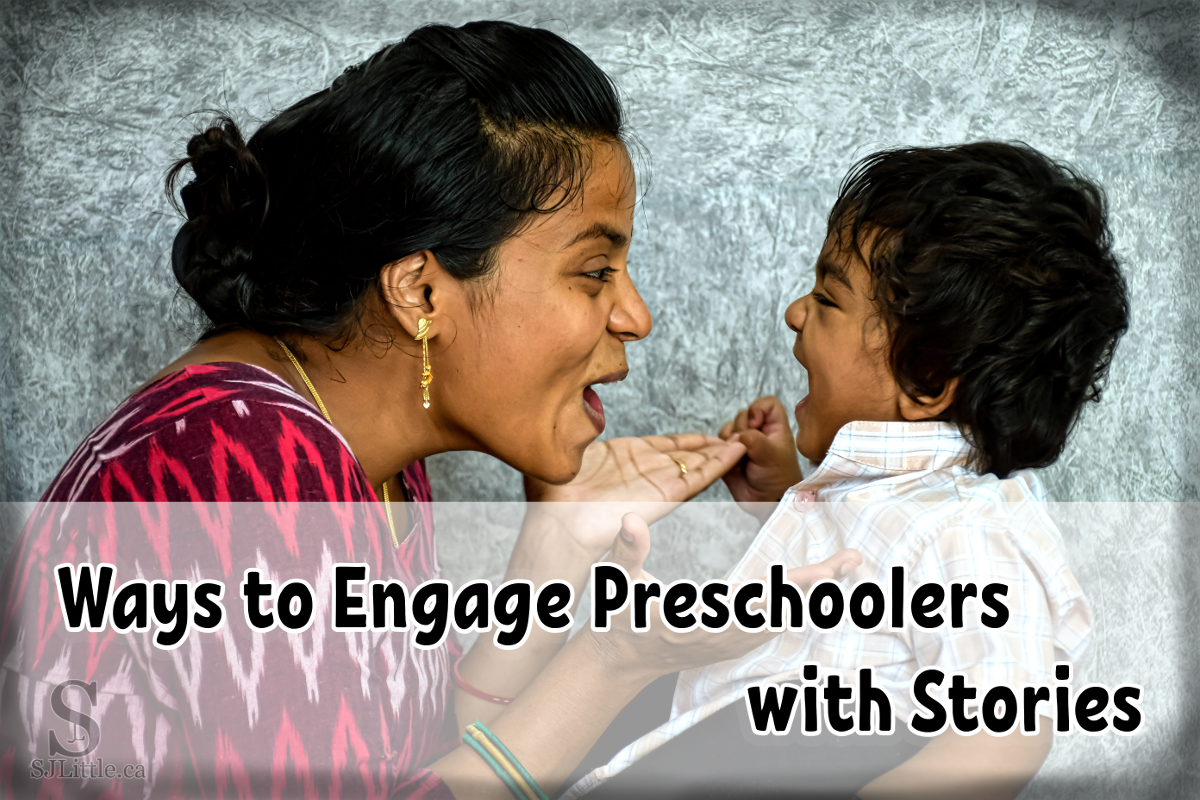
Woman talking to her laughing toddler

Some children get excited for storytime. Other children are restless and simply cannot be bothered to pay attention at storytime. Some adults enjoy reading picture books to their children. Others do not. Regardless, engaging children through story is valuable for pre-reading development.

I hope this helps you on your journey of engaging preschoolers with stories.

Why engage preschoolers with stories without reading a book?

As a preschool teacher, here are some key reasons I would tell a story without using a physical book:

  • Children who have a limited grasp of English, whether due to speech delays or English being a second language, find it hard to follow long strings of words.  Many picture books have a lot of words with only a few storyline clues in the pictures. Several of the methods recommended below show the action of the story rather than just telling about it.
  • Some children have a hard time sitting still in general. Using new and unusual ways to tell a story catches their attention far better. Later, as they learn to follow and enjoy stories, they may be more able and willing to sit for a picture book.
  • Sometimes the child has already heard the story you are telling many times before. They get bored and fidgety because they know exactly what’s coming. This is an important indicator for the storyteller that it is time to find a different story or a new storytelling method to help capture the attention of the audience.

Methods of storytelling

The possibilities are endless, but here are a few ideas to get you started. Keep in mind, you don’t have to make up your own story. Find an engaging preschool book you enjoy and retell the story using one of these methods.

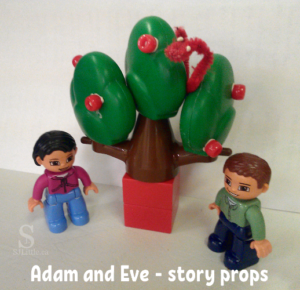
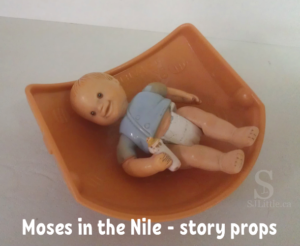
  • Toys as props
    • Lego/Duplo – If you have time beforehand, you can build whatever building or vehicle the story requires. Better yet, ask the children to help you build it, then set it aside until storytime.
    • Small dolls or animals (stuffed or plastic, etc.) – I recommend using small dolls or animals, especially ones that can bend as needed for the story (some dolls can’t sit down).
  • Playdough
    • Some stories might lend themselves well to playdough. It would likely be best to pre-build all the props you will need, or at least practice building them so that you can make them quickly without losing the children’s interest. Think ahead about how you will make sure all the children can see what you’re doing.
  • Act it out
    • Stand up, put on a hat and play the parts yourself. Only some stories will work well this way, especially for preschoolers. Alternatively, allow the children to be actors. However, here again, I caution you to be intentional to keep things fair.
  • Felt board
    • Felt boards or flannel boards might seem old fashioned, but the children love them. You can buy felt board sets to use that correlate with specific stories or buy generic sets of farm animals or community workers. Also, consider cutting your own shapes out of felt or paper with velcro on the back.
  • Puppets
    • Puppets can be store-bought or homemade. Children thoroughly enjoy puppets with or without a puppet theatre to hide behind. If you don’t want to make the puppet talk, have them whisper in your ear and then repeat what they “told” you, such as:
      • “What’s that, Mr. Rabbit?” “Oh, you’re looking for your carrot?” “Mr. Rabbit says he wants us to help him find his carrot.”
  • Cut out paper shapes
  • Picture book pages
    • When it comes to preschoolers, you don’t have to change things much to make it seem brand new and exciting. Do you have a picture book with a spine that is falling apart? Consider cutting all the pages out and laminating them. Then you can hold up the pages, one at a time, while you tell the story. I encourage you to number the pages for your own reference. Laminating the pages will help them last far longer.

Tips

  • Know the story
    • Whether you make up your own story or retell a story from your favourite picture book, the most important key to storytelling is to know the story well. If the story is written down, read it over several times and practice paraphrasing it. If you need to, write cue cards to jog your memory of the order of events. If it is a repetitive story such as Brown Bear, Brown Bear by Eric Carle, try writing out the first few stanzas to help you get started.
  • Know your audience
    • If the story you want to tell is too complex, or otherwise not age-appropriate, you will lose your audience. It isn’t so much a matter of whether the child is a five year old or a two year old. Rather, pay attention to where they are at developmentally. When you tell a story, watch for cues that they are not following a too complicated story or that they are bored since the story is too simple. This, of course, gets tricky when you have more than one child and a range of developmental levels.
  • Make eye contact
    • Once you’ve learned the story inside out, you won’t have to be looking at the words on the page. This frees you to make eye contact with the children as you are telling the story. Eye contact makes storytelling more personal and engaging.
  • Consider the setup
    • Think about how you can hold whatever props you might be using so that all the children can see them. For larger groups, you may need to sit on a chair while the children sit on the carpet. Or if the children are in chairs, you may need to stand. A child who can’t see the props will find it much harder to be engaged.
  • Involve the children
    • Find ways to involve the children in the story. Some of the methods in the following bullet points work well to enhance the reading of a picture book rather than telling the story without using the picture book.
      • Let them fill in blanks: A key way to do this is by letting the children say parts of the story based on clues you provide. For example, when I’m reading Brown Bear, Brown Bear, I might say “Brown bear, brown bear what do you see? I see a…” then wait for a child to tell me what picture/prop I’m showing.
      • Include actions: Some stories lend themselves well to actions. Kitten’s First Full Moon, by Kevin Henkes, is a good one for this. You can encourage the children to wiggle their noses or pretend to climb a tree with the character.
      • Ask questions: Pause the story from time to time to ask a question. The question could be in line with the story: “Do you think he will do it?” “How did that make her feel?” Or the question might be a side comment that enhances general knowledge: “What colour is her shirt?” “How many buttons does he have?” Be careful to watch for signs of your audience’s engagement with this one. Too many questions, or miss-timed questions, can break the flow of the storyline.
      • Hold props: Most children love being allowed to hold the props, but I caution you on this one. Be very careful about fairness. For small groups of children, or one on one storytimes, allowing the child to hold the props, or find whichever prop you need next, can be excellent. However, if you have a large group of children, but only two props, it may cause arguing over who gets to hold it. On another note, once you’ve let the children hold the props for one story, they may beg to hold them for all future stories. Therefore, consider carefully whether this powerful engagement tool will be beneficial in your setting.

Other resources

Need something simpler, yet still engaging? Check out my post about 7 interactive preschool books. These are a great way to engage a child with picture books who won’t sit for most books. sjlittle.ca/preschool/7-fantastic-animal-guessing-books-for-preschoolers

For a list of my favourite stories see my Pinterest board: www.pinterest.ca/sjlittleauthor/preschooltoddler-books-s-j-littles-favourite

Other picture books I also recommend: www.pinterest.ca/sjlittleauthor/books-for-preschoolers-and-toddlers

What are other ways you’ve engaged preschoolers with stories?

Person contemplating at beach with title: Beauty From Trials


I slipped out of the cabin and stepped quietly down the gravel path. Lifting my head to the early morning sky, I pulled my jacket closer.

It was November, many years ago, and I was on a retreat with my youth group.

As I moved away from the cabin, I looked around. Where should I head on this solitary morning walk?

Having made up my mind, I wandered towards the lake. I sang softly as I strolled, enjoying the crisp edge of the chill air.Waves on shore

At the beach, I breathed deeply. What lovely peaceful solitude. What a wonderful way to start my day with some alone time with my Lord.

I had a lot I wanted to talk to God about this morning. A number of months earlier I’d begun dealing with health issues. We did not yet know what the problem was.

This being my first retreat since the issues arose, I knew I couldn’t join any games as I tired easily, but I hoped and prayed I would be able to participate fully in the rest of the retreat.

As I stood discussing this with my Lord, and expressing to Him the grief of having to miss out on the games which I enjoyed so much, my eyes shifted to the edge of the beach where it met the water. I stopped. I stooped to look closer.

There, where the sand met the water, a narrow band of ice had formed. It was no more than a few inches wide. In an Albertan winter, ice is common, but this ice was different.

I expected ice on the edge of a lake to be flat and dull, but this ice displayed a sparkly shine. Not only that, but this ice was beautifully rounded as if by a master craftsman. It reminded me of glistening diamonds. I wish I had a picture to share with you!

As I crouched admiring the beauty of this ice, I puzzled over it. How did it become so lovely?

Examining it, I noted the wind causing the water to lap against the beach. As each chilly wave rolled over the ice and drained back, the ice became a little more sculpted and a little more sparkly.

I asked the Lord what I could learn from this, and quickly knew the answer.

That ice, had it never endured each wave, would have been bland and flat. Only the trial of many waves over an extended period of time could have given it the sculpted beauty I beheld.

What did it mean for me? In that moment, I needed to trust that God was using the trial of my ill health to round me and sculpt me so as to make me beautiful in a way that only He can. Then I can sparkle for Him.

“Consider it a great joy, my brothers and sisters, whenever you experience various trials, because you know that the testing of your faith produces endurance. And let endurance have its full effect, so that you may be mature and complete, lacking nothing.”  James 1:2-4 CSB

Why do I share this story from so many years ago? Because I believe it holds an encouraging reminder for us. The trials we are facing today, perhaps pandemic related or perhaps not, are being used by God to shape us to be more beautiful in His sight. Therefore, let us trust God to be at work when we face various trials, knowing that the testing of our faith leads to beauty.