
Flowers, Bible, and title: "God is with me"


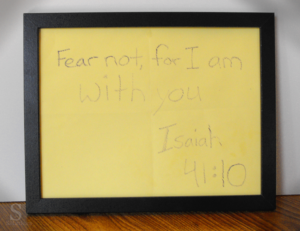
For many months, or perhaps even a year or two, I had a piece of paper on my wall on which I’d written the verse, “Fear not, for I am with you…” (Isaiah 41:10a ESV)

I had scribbled the words across the paper using crayon while teaching a Sunday school class. I debated throwing it out when the class ended. Instead, I folded it and slipped it into my bag. When I got home, I decided to stick the verse on my bedroom wall. I used a little sticky-tack to do so.

Over the following months, that verse was often a refreshing reminder and a needed encouragement. God was with me. When things got challenging, I wasn’t alone. He would help me. What an important reminder.

Gradually over time, the little piece of sticky-tack began to lose its stickiness. Then one day, I bumped the paper. It fell behind a desk and bedside table. I could not reach the paper to put it back up without moving the furniture and everything on top. Deeming that too much work, I left the paper where it was, knowing that one day I would find it again.

Several months went by.

The little piece of sticky-tack remained on the wall, reminding me of the absence of the paper. 

With the paper no longer there, I wasn’t frequently reminded of that beautiful verse: “Fear not, for I am with you…” (Isaiah 41:10a ESV)

As is often the case, life got busy and I became accustomed to not seeing the verse.

Then one day, as I sat in my room typing, I looked over at that little piece of Isaiah 41:10 written on yellow papersticky-tack and realized that I hadn’t thought of that verse for quite some time. Indeed, that very day I had been feeling a need to be reminded that God is with me.
This led me to ponder how sometimes in life, I easily and unintentionally slide from a place of closeness with God. I come to the point where I rarely remember to think of Him throughout the day. I forget that God is with me.

Sure I may still go to church on Sundays and read my Bible and pray, but I’m not mindful of His presence with me. My mind doesn’t keep jumping back to the things above. Songs of praise are rarely spontaneously on my lips.

Somewhere along the line, the frequent reminder of God’s presence with me slipped out of sight and I wasn’t intentional to put in the effort to bring it back. Like the paper, I let it slide and then, in the busyness of life, forgot about it.

Oh, that my heart would be inclined toward God and that my thoughts would often run to things above.

As Colossians 3:1-2 says, “If then you have been raised with Christ, seek the things that are above, where Christ is, seated at the right hand of God. Set your minds on things that are above, not on things that are on earth.” (ESV)

Today I dug out that paper and put it back up. This time I put it in a frame so it’ll be less likely to fall again. I want to keep in mind that God is with me. He has not left me alone. He will help me, and I am His.

“Fear not, for I am with you…”
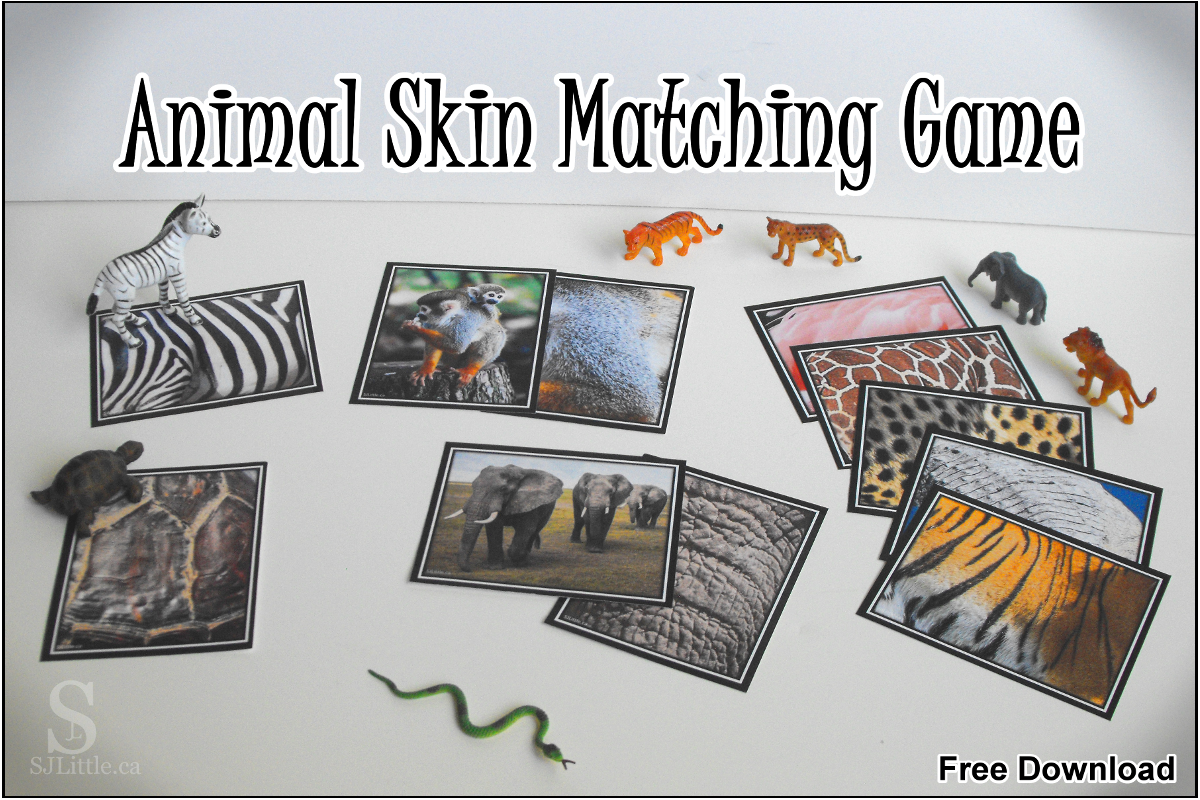
Picture of Animal Skin Matching Game and toy animals


Preschoolers love animals and so do I. Preschoolers also love guessing and learning. That’s why I’ve created this Zoo Animal Skin Matching Game.

Get started

Download and print the free Zoo Animal Skin Matching Game which includes 12 zoo animal skin pictures and photos of the corresponding animals. No sign up needed. (Big thanks to the Unsplash community for providing such excellent photos!)

If you want more than the 12 Zoo Animals, I encourage you to join my email list to receive another set of 12 animals (Exotic Animals) for a total of 24. Additionally, check out my selection of other Animal Skin Matching Games available on Teachers Pay Teachers.

Cut out the photos and, if possible, laminate them for increased durability.

Optional

If you have a set of small zoo animal toys, I would encourage you to use those to match with the printed skin pictures rather than using the matching animal photos I have provided.

Play at home (groups of 1-4 children)

  • Invite the children to gather around.
  • Set several of the animal skins in front of the children. (For younger children start with only a few distinct skins until they catch onto the game. For older children you could set out all 12 skins.)
  • Either set out all the matching animals or hand them to the children one at a time.
  • Encourage the children to match the animals to the cards.
  • Celebrate with the children when they have matched all the animals correctly!
  • Consider furthering the fun and education by using ideas listed in the “extend the learning” section below.

Play in group circle time (groups of 5+ children)

  • Count how many children you have and determine how you will enable each child to have a turn. The print out includes 12 animal skins to match. If you have more than 12 children, consider playing the game twice so that every child can participate.
  • Before circle time, arrange the animal skins on a wall or board where everyone can see them. Have tape or sticky-tack ready so the children can attach the animals to the skins.
  • Once everyone is gathered for circle time, point out the skins and explain that you will play a matching game.
  • One at a time, call the children to the front and hand them an animal. Allow them to match their animal to the appropriate skin. (Younger children may need hints at first.)
  • Consider furthering the fun and education by using ideas listed in the “extend the learning” section below.

Play in a video call

  • Option one: Show one skin at a time and see if the children can guess what animal they belong to. (This works better for older children.)
  • Option two: Show three skins and one animal. Encourage the children to guess which skin belongs to that animal.
  • Consider furthering the fun and education by using ideas listed in the “extend the learning” section below.

Extend the learning

  • Sing the animal song: “If You Want To Be A…”
  • Read a zoo themed book. I have collected some of my favourite zoo books on my Pinterest board here.
  • Many of the animal photos have more than one animal. Have fun counting them.
  • See how many colours you can find in the photos.
  • After the children have finished the animal skin matching game, consider taking the opportunity to talk with your children. Topics could include:
    • Observe how different and unique each animal’s skin is, yet they are all animals. Discuss how people all look different but that doesn’t make us any less important – we’re all special!
    • Talk about how each animal is good at something different – monkeys climb trees, turtles carry homes on their backs, giraffes reach leaves at the top of the trees, etc. Then steer the conversation to how each person is good at different things.
    • Ask the children which animal is their favourite, or which they like pretending to be the most.
    • For Christians: Marvel together at how amazingly complex and varied creation is and how that reminds us that God is far more spectacular than all the creatures He has made.

Want more Animal Skin Matching Sets created by S J Little? Check out the following:

Exotic Animal Skin Matching Game

Free when you join S J Little’s email list (see form above)


Farm Animal Skin Matching Game

Free through Teacher’s Pay Teachers


Ocean Animal Skin Matching Game

Available for purchase on Teacher’s Pay Teachers


Seedlings and the title: Thinning My Garden

One of my favourite parts of gardening is seeing the first sprouts pushing their heads through the ground. The newness and anticipation of a coming harvest is exciting. How big will the beets grow this year? How many zucchinis will come? Will we be able to harvest the tomatoes before the first frost?

(A quick disclaimer before I continue. I am not an experienced gardener, so please do not take this post as gardening advice.)

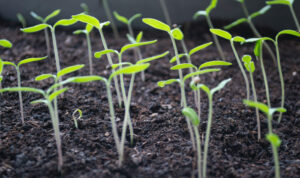
I love seeing those little seedlings grow bigger each day. Seedlings sprouting

Soon, however, comes a stage I don’t like so much: thinning the garden.

Often gardeners plant more seeds than they will let grow to full maturity. Because of this, the seeds are too close to each other.

As the seeds grow, they become crowded and begin to fight for sunlight and water. If not thinned, none of the seeds will grow strong and healthy. They will remain half-shrunk and weirdly shaped as they strain for more light.

So, the morning comes when I slip into my gardening sandals and head out for a closer look.

First, I pull the weeds. I mercilessly yank them from the ground. They don’t belong. They won’t bring value or a harvest. I don’t want them. They only serve to get in the way of the plants I want to grow.

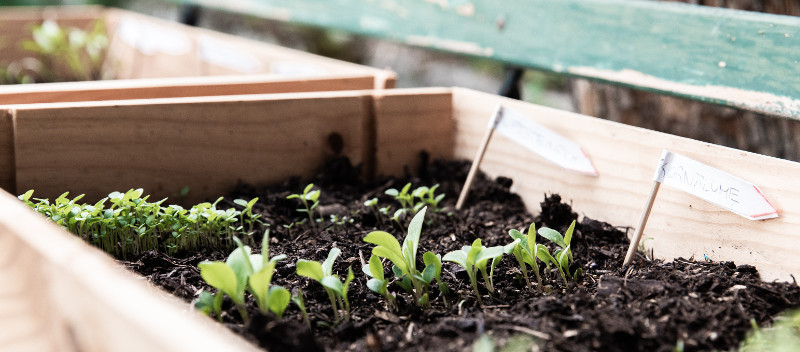
New sprouts in a garden

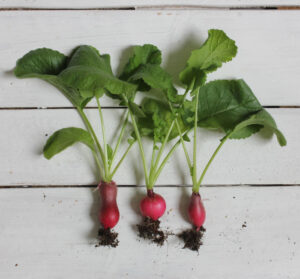
Then I look at the radish row. They’re often quicker to grow than the others. The plants are far too close. I know I have to thin them if I want large healthy radishes.

I crouch down and take a deep breath.

I pull a radish seedling. Looking at it, I feel bad to have had to pull a perfectly healthy and good plant that could have grown excellent food. Still, if I didn’t pull that seedling out, the others wouldn’t grow well.

Looking again at the row, I pull another seedling and then another. Pretty soon I have a pile of radish seedlings. Thankfully I can eat these sprouts for lunch. Yet something inside of me remains sad that they will never reach their fullest potential.

When at last I sit back and look at the radish row, I smile. These remaining plants will now be able to grow strong and healthy. It was painful pulling the sprouts, but the reward will be worth it. No half-grown radishes for me.

On to the next row of plants I go, and then the next. Pretty soon the garden is looking far more empty, yet I remind myself that it now holds more chance of reaching its fullest potential. The harvest will be bigger and better because of the thinning I did today.

What about in my life? Do I need to do some thinning there?

Radishes

Having grown up attending church, I have long known the parable of the sower. The part about the seed that fell among the weeds seems fitting to consider now.

“Other seed fell among thorns, and the thorns came up and choked it, and it didn’t produce fruit. … these are the ones who hear the word, but the worries of this age, the deceitfulness of wealth, and the desires for other things enter in and choke the word, and it becomes unfruitful.” (Mark 4:7, 18-19 CSB)

Okay, got it. In order to be fruitful for God, I must get rid of the weeds in my life. Weeds are bad things, right? Don’t covet wealth, don’t worry, don’t pursue other bad worldly things. If I get caught up in those, my life won’t reach its fullest God-given potential.

Take out the weeds in my life, and I’m good to go, right? My experience in the garden says there might be more to do.

Maybe there are other things I need to thin out of my life in order to thrive in what I keep.

Jesus, after having a powerful night of ministry did just that, as recorded in Mark 1:35-38 (CSB).

“Very early in the morning, while it was still dark, He got up, went out, and made His way to a deserted place; and there He was praying. Simon and his companions searched for Him, and when they found Him they said, ‘Everyone is looking for You.’  And He said to them, ‘Let’s go on to the neighboring villages so that I may preach there too. This is why I have come.'”

I can so easily read those verses and think, “Everyone was looking for Him. He could have stayed and taught them so much more and done more miracles. They were ready to listen.”

Jesus, however, knew the task His Father had placed before Him. If He was to fulfill His mission on earth, He had to move on.

Sometimes I get caught up in all the good things I have opportunities to do. When a door is open, that means I should go in, right?

I must remind myself that this is not always the case. As with my garden, if I am involved in too many good things, none of them will thrive. They will be half-nourished and straining for light.

Instead, I need to prioritize my life intentionally. Sometimes prioritizing includes pulling out good healthy things so that the rest can thrive.

What do I need to thin out of my life so that what remains can grow? I’ll have to follow Jesus’ example and pray about that.

In the meantime, here are some valuable quotes to ponder.

“Good is not always God’s will, but God’s will is always good.” – Watchman Nee

“Our greatest fear should not be of failure, but of succeeding at something that doesn’t really matter.” – D. L. Moody

Toys laying abandoned.

Are your kids bored of their toys? Are they disengaged and uninterested? Try rotating their toys.

Toy rotation is highly beneficial in preschools, daycares, day homes and even in everyday family life.

Benefits of toy rotation

  • After a toy is packed away for a length of time, children become excited to play with it again because they haven’t seen it for so long.Child surrounded by toys
  • Putting away some toys for rotation may leave your child with less toys to play with. Believe it or not, this can lead to deeper engagement with the few toys that are available. With too many toys a child may bounce from one toy to another, rather than fully playing with any one toy. Sometimes less is truly more.
  • Having fewer toys available also shrinks the amount of mess a child can make with their toys at any given time.

How long should toys be available?

The answer depends greatly on your child, your child’s age, and the toy itself. Because the recommended length of time is so situationally dependent, watch how engaged your child is. When they show signs of being less engaged, it’s time to rotate. Be aware, leaving toys out, until your child is bored, may significantly decrease their excitement at seeing those toys again later. Therefore, try to do the rotating on a high note so they will associate good memories with the toys for next time.

Older children, such as elementary aged children, may be able to regulate the rotating themselves. Store all their toys on a shelf. Allow them to get out and play with only one or two types of toys at a time – perhaps the cars and the blocks. When the elementary aged children realize they are getting tired of the toy, they will ask to get out a different type of toy. Have them first clean up and put away the toy they are tired of, then they may get out the next toy. In this way, they can take some responsibility for rotating their own toys.

What about at preschools and daycares, etc?Child playing with wooden blocks

I have been a part of preschools and daycares who rotated their toys once a week, every other week, once a month, or never. Where the toys were never rotated, the children were extremely bored. They engaged in very little meaningful play and often misbehaved.

I personally would recommend rotating the toys every week or two. Some toys, such as large wooden blocks, may not need rotating as often, while other toys, such as puzzles, may only engage each child for one sitting and therefore benefit from frequent rotation.

Toy rotation in preschool and daycare settings comes with the benefit of providing a good toy washing routine. Every time new toys are set out, the old ones can be washed and left to dry before being packed away.

Does toy rotation make a difference?

My years of experience have given me reason to enthusiastically say “yes!” Have you seen the difference toy rotation makes?

Blue carpet with title

One morning, not so long ago, I spent some time praying before my day got started.

As is my habit, I brought before the Lord my family and friends and those whom I know have heavy burdens just now.

I glanced at the clock, it was time to get moving. I had things to do and breakfast to eat.

To close my time of prayer, I took a moment to kneel as I asked Him to be Lord of my day.

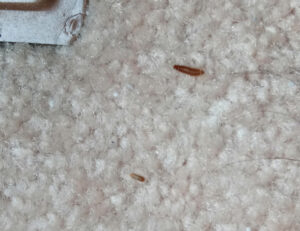
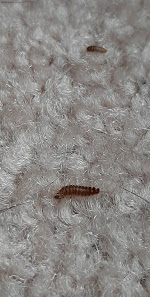
It was at that moment, as I knelt, that I saw them.Bugs on a carpet

First, I saw one little red-ish speck on the carpet, then I saw another. Leaning closer I realized they were bugs.

To my dismay, one careful survey of the surrounding area revealed several more bugs of the same type.

They weren’t fast bugs, nor terribly scary ones. It had surely taken them quite some time to get to where they were now. They looked almost like mini caterpillars, so small that, had I been standing, I likely wouldn’t have noticed them.

If there were so many of these bugs scattered across the floor, then naturally I had to assume there was a source of food nearby. Clearly they must have a well-fed flourishing colony.

I surveyed the carpet again. The scattering of bugs appeared to radiate from one particular cabinet.

Bugs on a rug

Immediately I could guess their food source. That cabinet had previously spent many years as the cat food place. While we had a dog, it was necessary to place the cat food on top of this cabinet to keep the dog from eating it.

My cats, unfortunately, were rather messy eaters. When they ate dry cat food, they always left large amounts outside the bowl. Despite our greatest efforts, some of that cat food fell down the back of the cabinet.

There was little doubt in my mind that it was that old spilled cat food that nourished these little bugs. To them, it was a feast allowing them to multiply. To me, it was an old unreachable space that had not fully been cleaned out.

Later that day, the effort was made to move this heavy cabinet so as to reveal the hidden and unreachable places behind it.

After a thorough vacuuming and cleaning, the spot was declared good and the heavy cabinet put back in place.

So what? Why do I share this morning’s adventure? Because it got me thinking.

Do I have hidden and unreachable places in my life that need to be revealed and cleaned?

It is a convicting question. I can recall times in the past when God has brought to light things I hadn’t dealt with, which in turn had begun feeding bugs. Things that I didn’t realize or remember were there until I started seeing bugs and, with God’s help, found the source – a process which sometimes took months or years.

No matter how many bugs I got rid of, if I never found the source – the thing that was feeding them – I would forever find more bugs.

The cabinet in my house behind which the old cat food lay was heavy and hard to move. When I trace the bugs in my life to their source, I may find something similar. The source may be blocked by something I can’t move myself. Often only God can clean and heal those areas.

How then, am I to notice these bugs in my life?

More often than not, it must be God who enables me to spot the bugs in my life.

I believe it is primarily when I walk closely with the Lord with a humble heart that He reveals these bugs to me and guides me to their sources.

When did I spot the bugs in my house? When I knelt to pray.

Had I walked through the same room remaining on my feet and busy going about my day, I would never have noticed them.

I believe there is a lesson there for me. Yes, I need this reminder.

More often than not, it is when I take time to pray that God reveals to me the bugs that must be dealt with in my life.

May I more often join David in praying:

“Search me, God, and know my heart; test me and know my concerns. See if there is any offensive way in me; lead me in the everlasting way.” (Psalm 139:23-24 CSB)

Indeed, “may the words of my mouth and the meditation of my heart be acceptable to You, Lord, my rock and my Redeemer.” (Psalm 19:14 CSB)